


Views: 1
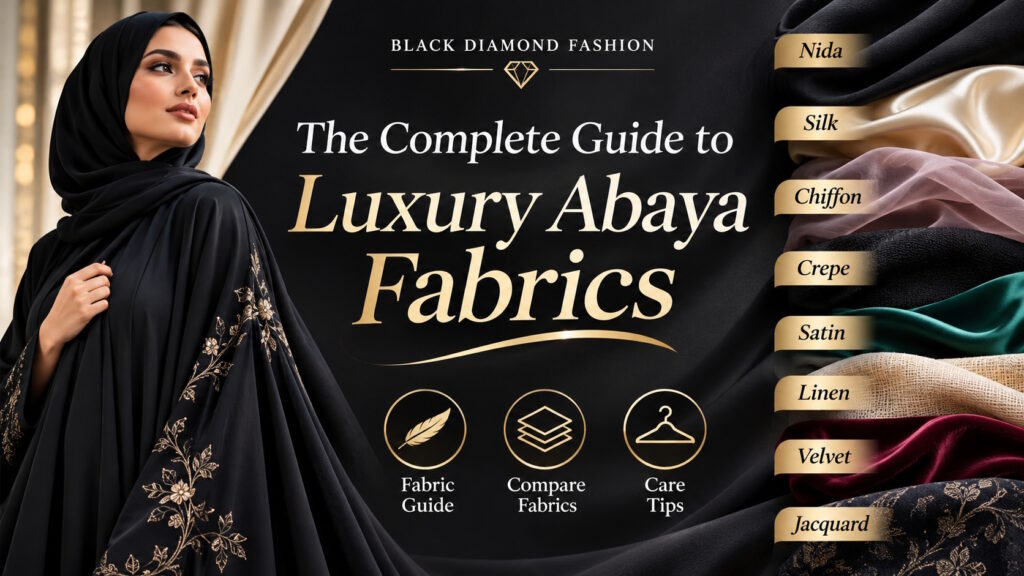
The Complete Guide to Luxury Abaya Fabrics
Luxury abayas combine modest elegance, refined tailoring and carefully selected textiles. From the fluid softness of premium Nida to the glamorous sheen of satin, choosing the right fabric makes a remarkable difference to comfort, drape and overall appearance.


This comprehensive guide explores eight popular luxury abaya fabrics, their benefits, limitations, ideal occasions and care requirements.
1. Premium Nida — Everyday Luxury


Nida is a popular choice for contemporary abayas, especially in Gulf fashion. It is appreciated for its smooth feel, understated finish and graceful movement. Nida is a commercial fabric name rather than a guarantee of a specific fiber composition.
Advantages: Soft drape, comfortable options, sophisticated appearance and generally good opacity in suitable weights.
Disadvantages: Quality varies, and certain versions can develop static, wrinkles or surface wear.
Best for: Everyday abayas, workwear, travel and classic black designs.
2. Silk — Timeless Sophistication

Natural silk is renowned for its smooth texture, elegant movement and refined finish. Different silk weaves create different effects, from subtle matte surfaces to luminous eveningwear.
Advantages: Luxurious hand feel, beautiful drape and good breathability.
Disadvantages: Higher cost and potentially demanding cleaning requirements.
Best for: Eid, formal gatherings and exclusive designer abayas.
3. Chiffon — Delicate and Flowing


Chiffon is a lightweight, often translucent fabric that creates graceful movement. It is frequently used in overlays, sleeves and layered abaya designs.
Advantages: Airy, delicate, visually elegant and suitable for layering.
Disadvantages: Can snag easily and often requires an opaque lining.
Best for: Evening abayas, formal layering and embellished designs.
4. Crepe — Contemporary Elegance

Crepe is recognized by its subtly textured surface. Depending on the fiber and weight, it can produce either structured silhouettes or soft flowing garments.
Advantages: Versatile, sophisticated and well suited to tailoring.
Disadvantages: Some types wrinkle or feel heavy in warm conditions.
Best for: Office abayas, modern minimalism and smart everyday wear.
5. Satin — Glamorous Shine

Satin is a weave characterized by its smooth, often shiny surface. It can be manufactured using silk, polyester or other fibers.
Advantages: Lustrous appearance, rich colors and glamorous styling.
Disadvantages: Some satin fabrics show snags, marks or wrinkles easily.
Best for: Weddings, Eid celebrations and luxury eveningwear.
6. Linen — Natural Summer Luxury
Linen is a natural fiber valued for its breathability, absorbency and distinctive texture. Its relaxed appearance is particularly appealing for casual luxury collections.
Advantages: Breathable, comfortable in warm weather and naturally textured.
Disadvantages: Wrinkles readily and usually has less fluid movement than Nida.
Best for: Summer abayas, daytime outings and resort-inspired fashion.
7. Velvet — Rich Winter Elegance
Velvet features a dense, soft pile that gives it depth, richness and a distinctive play of light.
Advantages: Luxurious appearance, beautiful color depth and a plush finish.
Disadvantages: Often warm, relatively heavy and sensitive to pressure marks.
Best for: Winter events, formal gatherings and premium seasonal collections.
8. Jacquard — Decorative Woven Luxury
Jacquard refers to fabrics with intricate designs woven into the material itself. Floral motifs, geometric patterns and subtle tonal textures can create sophisticated statement abayas.
Advantages: Distinctive woven patterns, visual depth and designer appeal.
Disadvantages: Some varieties are stiff, heavy or susceptible to snagging.
Best for: Designer collections, special occasions and statement garments.
Luxury Abaya Fabric Comparison
| Fabric | Appearance | Best Use | Care |
|---|---|---|---|
| Premium Nida | Soft, matte | Everyday and work | Easy to moderate |
| Silk | Refined, smooth | Luxury events | Delicate |
| Chiffon | Light, sheer | Evening overlays | Delicate |
| Crepe | Textured | Office and daily wear | Varies |
| Satin | Lustrous | Formal celebrations | Moderate to delicate |
| Linen | Natural, relaxed | Summer | Moderate |
| Velvet | Plush, rich | Winter occasions | Delicate |
| Jacquard | Patterned, textured | Designer abayas | Varies |
How to Choose the Perfect Abaya Fabric
Consider the climate, occasion, drape, opacity, fabric weight and maintenance requirements. For warm climates, lightweight breathable fabrics and comfortable linings are particularly important. For special events, fabric texture and movement can help create a more luxurious appearance.
How to Care for Luxury Abayas
- Always follow the garment care label.
- Use gentle washing methods when permitted.
- Avoid prolonged direct sunlight when drying dark fabrics.
- Use appropriate low-temperature steaming or pressing.
- Store delicate or embellished garments carefully to prevent snags.
- Choose professional cleaning when required for silk, velvet or intricate embellishments.
Final Thoughts
The best luxury abaya fabric combines elegance, comfort and practical durability. Premium Nida and crepe are versatile everyday choices, while silk, chiffon, satin, velvet and jacquard offer distinctive options for special occasions. Linen brings relaxed sophistication to warmer seasons.
Black Diamond Fashion celebrates elegant design, carefully selected textiles and timeless modest fashion.