


Views: 9
How to Take Accurate Measurements for a Custom Dress
Creating a beautifully tailored dress begins with one essential step: taking accurate body measurements. Whether you are ordering a custom evening gown, wedding dress, traditional jalabiya, or elegant party outfit, precise measurements are the foundation of a comfortable and flattering fit.


Even a stunning design made from luxurious fabric can look disappointing if the measurements are incorrect. In this guide, you will learn how to measure your body correctly, which measurements your tailor needs, and how to avoid common fitting mistakes.
1. What You Need Before Taking Measurements
Before starting, prepare the following essential tools:
- A flexible measuring tape
- A full-length mirror
- A notebook or measurement chart
- A pen to record your measurements
- A friend or professional tailor to assist you
- The undergarments you intend to wear with your dress


Wear close-fitting clothing or suitable undergarments. Stand naturally with your shoulders relaxed, your back straight, and your feet comfortably together.
2. Essential Body Measurements for a Custom Dress
Most custom dresses require six fundamental body measurements. Additional measurements may be needed depending on the design and silhouette.
Bust Measurement
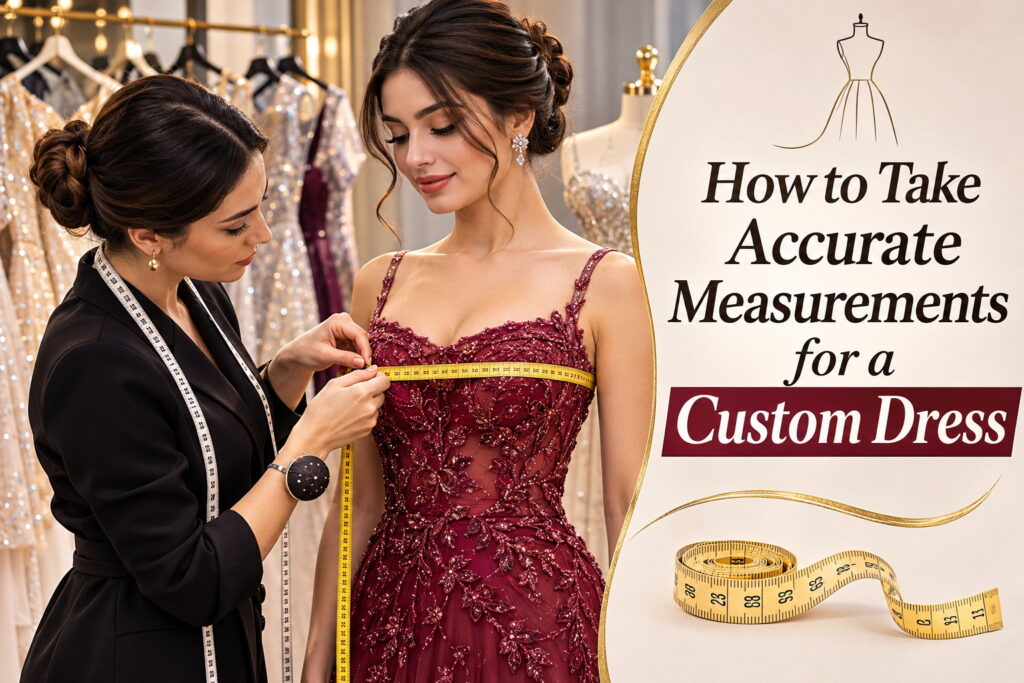
Wrap the measuring tape around the fullest part of your bust. Keep the tape horizontal across your back and ensure it is comfortably snug.
Stand naturally and breathe normally while measuring. Avoid lifting your chest or pulling the tape too tightly.
Waist Measurement
Locate your natural waistline, typically the narrowest part of your torso between your rib cage and hips.
Wrap the tape around your natural waist without pulling in your stomach. This measurement is especially important for fitted evening gowns and dresses with defined waistlines.
Hip Measurement
Stand with your feet close together. Measure around the fullest part of your hips and buttocks, ensuring the tape remains horizontal.
Accurate hip measurements are particularly important for mermaid gowns, pencil dresses, and other close-fitting silhouettes.


Shoulder Width
Measure across the back from one shoulder point to the other. A second person should help you take this measurement accurately.
Correct shoulder measurements help ensure that sleeves, necklines, and fitted bodices sit properly.
Sleeve Length
Start at the shoulder point and measure along the outside of your slightly bent arm to the desired sleeve ending.
For long sleeves, measure to the wrist. For shorter sleeve designs, measure to the required length.
Dress Length
Measure from the shoulder or another clearly specified reference point to the desired hemline, following the body’s contour as instructed by your tailor.
For floor-length gowns, wear the shoes or heels you plan to use with the finished dress.


3. Additional Measurements for Better Dress Fitting
Depending on the style and construction of your dress, your tailor may request several additional measurements.
| Measurement | Purpose |
|---|---|
| Upper Bust | Helps achieve a precise fit around the upper chest and neckline. |
| Underbust | Essential for structured bodices and empire-waist dresses. |
| Shoulder to Waist | Determines the correct bodice length. |
| Waist to Hip | Helps position shaping and fitted skirt details. |
| Armhole Circumference | Ensures comfortable movement around the arms. |
| Upper Arm | Important for fitted and long-sleeved dresses. |
| Wrist | Required for fitted cuffs and narrow sleeves. |
| Neck Circumference | Useful for high-neck and collar designs. |
| Waist to Floor | Helps determine long skirt and gown lengths. |
4. How Measurements Change With Different Dress Styles
Fitted Evening Dresses
Close-fitting evening gowns require precise bust, waist, hip, and torso measurements. Small measurement differences can significantly affect the finished appearance.
A-Line Dresses
A-line dresses generally require accurate bust, shoulder, and waist measurements. The skirt gradually widens from the waist or upper body, depending on the design.
Traditional Jalabiyas
Jalabiyas often feature relaxed silhouettes. Shoulder width, sleeve length, overall length, and comfortable wearing ease are particularly important.
Strapless and Corset-Style Dresses
These designs usually require detailed upper bust, bust, underbust, waist, and torso measurements to achieve proper support and a secure fit.
5. Common Dress Measurement Mistakes to Avoid
Even small errors can affect the comfort and appearance of a custom-made dress. Avoid these common mistakes:
- Pulling the measuring tape too tightly: This may result in an uncomfortable or restrictive dress.
- Measuring over loose clothing: Extra fabric can distort the measurements.
- Using inconsistent measuring points: Always follow the same body landmarks.
- Measuring alone: Shoulder, back, and certain length measurements are easier with assistance.
- Forgetting heel height: This can affect the hemline of a floor-length gown.
- Adding extra inches yourself: Record actual body measurements and let the tailor calculate garment ease.
- Skipping verification: Take each measurement twice and resolve any differences.
6. Custom Dress Measurement Chart
Use this checklist before placing your custom dress order. Record all measurements consistently in either centimeters or inches.
| Body Measurement | Your Measurement |
|---|---|
| Bust | ________ |
| Natural Waist | ________ |
| Hips | ________ |
| Shoulder Width | ________ |
| Shoulder to Waist | ________ |
| Underbust | ________ |
| Upper Bust | ________ |
| Armhole | ________ |
| Upper Arm | ________ |
| Sleeve Length | ________ |
| Wrist | ________ |
| Waist to Floor | ________ |
| Full Dress Length | ________ |
Measurement Unit: cm / inches
Preferred Fit: Fitted / Regular / Relaxed
Dress Style: __________________
Heel Height: __________________
7. Why Professional Dress Fittings Matter
Although accurate measurements are essential, a professional dress fitting provides an additional level of precision.
During a fitting, the tailor can evaluate your posture, natural body proportions, preferred fit, fabric behavior, and freedom of movement.
Complex gowns may require more than one fitting, particularly when they include corset construction, draping, delicate embellishments, or asymmetrical details.
A well-planned fitting process helps identify adjustments before the dress is completely finished.
8. Frequently Asked Questions
Should I measure myself or visit a tailor?
You can take basic measurements at home, but professional assistance is recommended for fitted evening dresses, wedding gowns, and structured garments.
Should I add extra centimeters to my measurements?
No. Record your actual body measurements. Your tailor should determine the appropriate wearing ease based on the fabric and dress design.
How tight should the measuring tape be?
The tape should sit gently against the body without squeezing the skin or hanging loosely.
Do I need to wear heels when measuring dress length?
For floor-length gowns, it is best to wear the intended shoes so the tailor can determine the correct hemline.
How often should I update my measurements?
Take fresh measurements before ordering a custom dress, especially if your body proportions may have changed since your previous fitting.
Final Thoughts: The Perfect Fit Begins With Precision
Accurate body measurements are the foundation of every beautifully tailored custom dress. Taking the time to measure correctly helps ensure your finished outfit complements your figure, supports comfortable movement, and reflects your personal style.
Whether you are creating an elegant evening gown, a sophisticated party dress, or a traditional jalabiya, the combination of precise measurements, thoughtful design, and skilled tailoring can make a remarkable difference.
A perfect custom dress is not simply about choosing the right design. It is about creating a garment that feels as beautiful as it looks.