


Views: 13
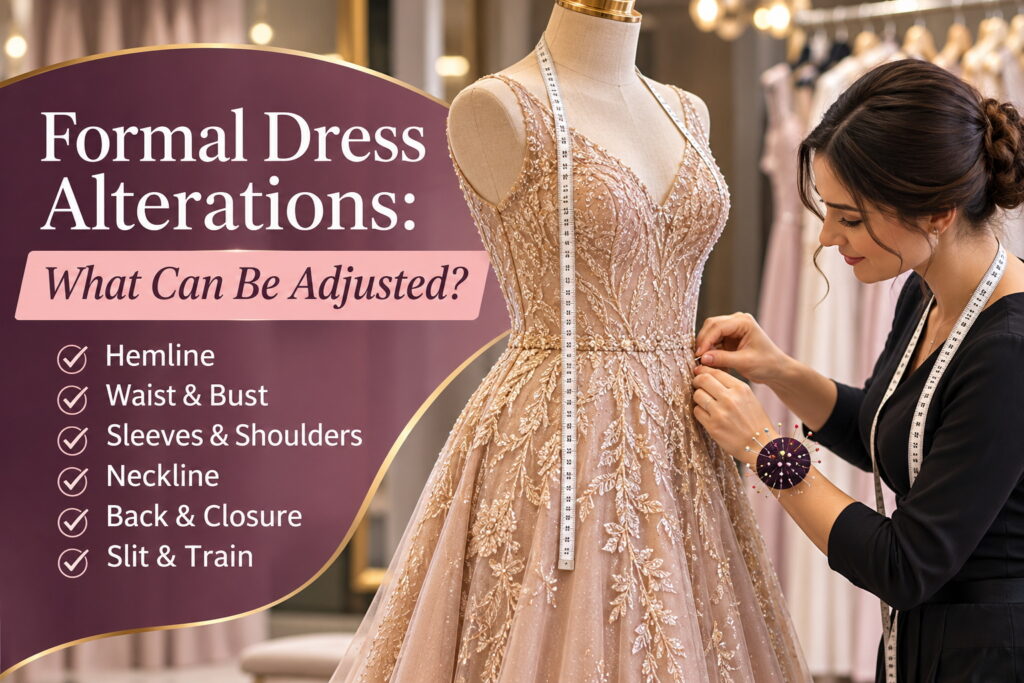
Formal Dress Alterations: What Can Be Adjusted?
A beautiful formal dress becomes even more elegant when it fits perfectly. Whether you are preparing for a wedding, gala, engagement party, or special celebration, professional alterations can improve the comfort, appearance, and fit of your gown.


1. What Parts of a Formal Dress Can Be Altered?
Many formal gowns can be adjusted to better suit your proportions and personal style. The possibilities depend on the fabric, dress construction, available seam allowance, and decorative details.
| Alteration | Possible Adjustment |
|---|---|
| Hemline | Shorten the dress to suit your height and shoes. |
| Waist | Take in or sometimes let out the waist. |
| Bust | Adjust darts, shaping, cups, or support. |
| Shoulders | Shorten straps or adjust shoulder seams. |
| Sleeves | Shorten, narrow, or reshape sleeves. |
| Neckline | Raise or reshape the neckline or add coverage. |
| Back | Improve fit or modify the closure where feasible. |
| Slit | Reduce, close, or sometimes introduce a slit. |
| Lining | Adjust the lining for comfort and smoothness. |
| Train | Shorten, reshape, or add a bustle. |
2. Hemline Alterations
Shortening a gown is one of the most common formal dress alterations. The ideal length depends on the design, your height, and the shoes you plan to wear.


Chiffon, satin, lace, and multi-layered gowns can require different hemming techniques. Dresses with embroidery or decorative borders may need extra work to preserve their original design.
3. Waist and Bust Alterations
A carefully tailored waist creates a balanced silhouette. A loose bodice may be taken in at the side seams or darts, while minor bust adjustments can improve shaping and support.
Letting out a dress is not always possible. The tailor must check the available seam allowance and whether previous stitching marks would remain visible.
4. Sleeve and Shoulder Adjustments
Shoulders and sleeves play an important role in comfort and elegance. Straps can often be shortened, sleeves narrowed, and some shoulder seams adjusted.
Adding sleeves may be possible when matching fabric is available and the bodice construction supports the change.


5. Neckline and Modesty Alterations
Some dresses can be adapted for additional coverage by raising the neckline, adding a fabric panel, incorporating a matching lining, or adjusting sheer sections.
These alterations are particularly useful for modest evening dresses and elegant formal wear. Major neckline changes, however, may require careful reconstruction.
6. Slits, Backs, and Trains
Depending on the original design, a high slit can sometimes be lowered or closed. Back closures can be adjusted, and a long train may be shortened or fitted with a bustle for easier movement.
Changing the shape of an open-back dress or introducing a new slit may be more complicated because of the garment’s structure and fabric placement.
7. Which Formal Dress Alterations Are Difficult?
- Making a dress significantly larger without enough spare fabric.
- Resizing heavily beaded or embroidered gowns.
- Reconstructing a corset or boned bodice.
- Changing the dress silhouette substantially.
- Altering intricate lace, delicate mesh, or complex draping.
- Matching additional fabric to an existing gown.
A professional assessment is important before attempting complex alterations, especially when the dress contains boning, decorative appliqués, or multiple lining layers.
8. When Should You Book Dress Alterations?
For a typical formal gown, arrange your first fitting approximately three to six weeks before your event. Highly detailed or extensive alterations may require more time.
Bring your event shoes, intended undergarments, and any accessories that may affect the dress fit. Arrange a final fitting to check the length, comfort, and movement.
9. Tips for Getting the Perfect Fit
- Choose a tailor experienced with formal and evening gowns.
- Discuss the alterations before any fabric is cut.
- Try sitting, walking, and raising your arms during fittings.
- Confirm the expected cost and completion date in advance.
- Allow time for a final adjustment if necessary.
Final Thoughts
A perfectly fitted formal dress can transform your appearance and confidence. From a simple hemline adjustment to a more detailed bodice alteration, skilled tailoring helps preserve the beauty of the original design while making it feel uniquely yours.
At Black Diamond Fashion, we believe elegance begins with a flattering fit, thoughtful details, and a dress that makes every special occasion memorable.