
Views: 0
The Difference Between Crepe, Organza and Tulle: A Complete Fabric Guide
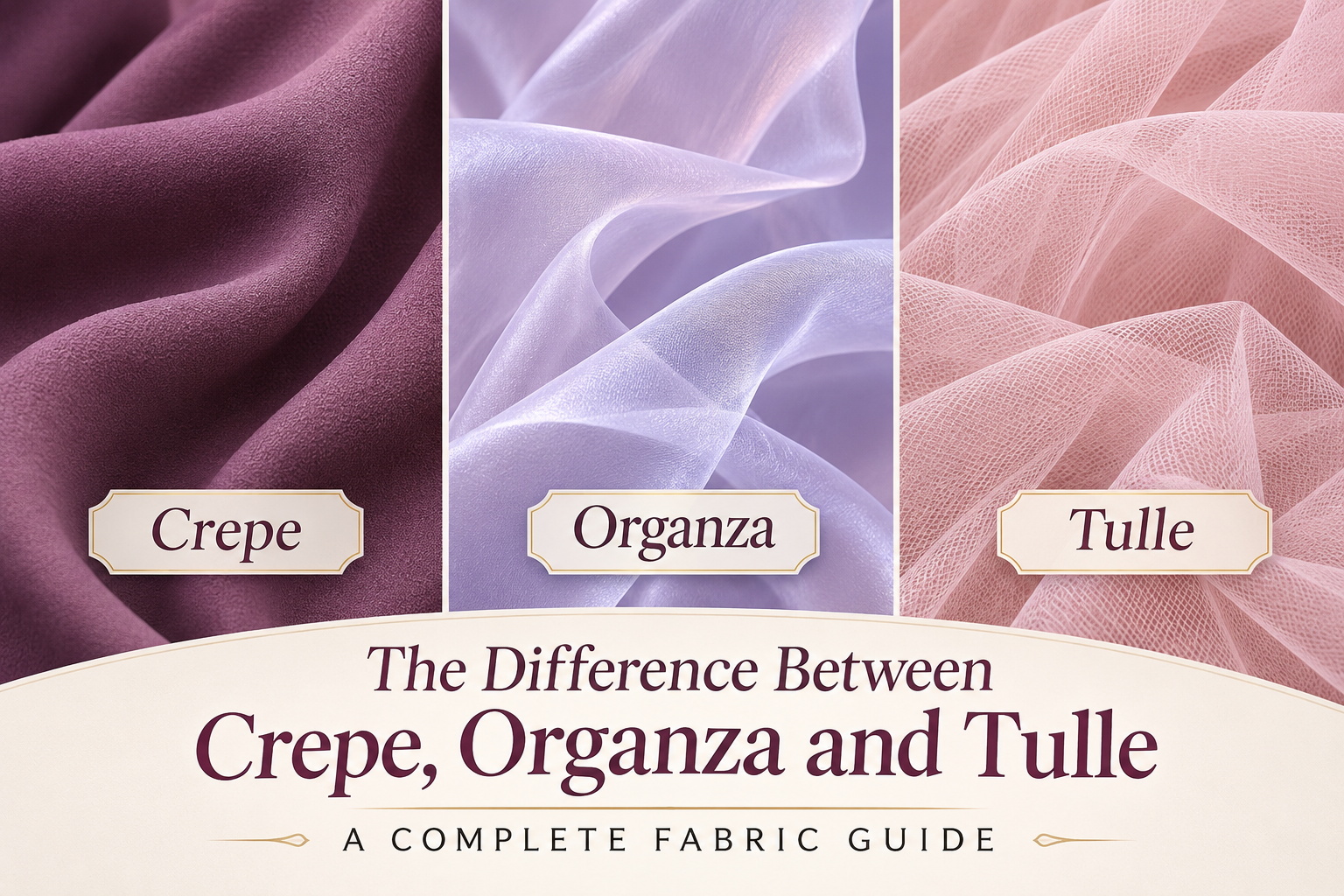
Choosing the right fabric is essential when creating an elegant dress. Crepe, organza and tulle are three popular materials used in eveningwear, bridal fashion and couture, but each offers different textures, structures and silhouettes.

1. Crepe: Elegant, Fluid and Refined
Crepe is recognized for its subtly textured surface and graceful drape. Depending on the fiber and construction, it can be lightweight and flowing or heavier and more structured.
Key Characteristics
- Soft or slightly grainy surface
- Usually opaque in dress-weight varieties
- Elegant drape and fluid movement
- Available in silk, polyester and viscose varieties
- Suitable for minimalist silhouettes
Best for: Evening gowns, formal dresses, modest fashion, tailored outfits and elegant jalabiyas.
Design tip: Choose medium-weight crepe for a refined fitted gown or a graceful A-line dress.
2. Organza: Light, Sheer and Structured

Organza is a lightweight, sheer and crisp fabric that holds its shape beautifully. Designers often use it to create statement sleeves, dramatic skirts and sculptural couture details.
Key Characteristics
- Transparent or semi-transparent
- Crisp texture with structured volume
- Delicate sheen
- Available in silk and synthetic versions
- Perfect for architectural silhouettes
Best for: Statement sleeves, couture dresses, structured skirts, bridal overlays and decorative details.
Design tip: Layer organza over an opaque base fabric to achieve volume and sophistication while maintaining coverage.
3. Tulle: Delicate, Airy and Romantic

Tulle is a fine mesh fabric known for its airy, lightweight construction. It is particularly popular for wedding gowns, bridal veils, layered evening dresses and romantic silhouettes.
Key Characteristics
- Fine net or mesh structure
- Sheer and lightweight
- Available in soft and stiff varieties
- Creates volume when layered
- Ideal for embroidery and decorative appliques
Best for: Wedding dresses, bridal veils, princess gowns, ball gowns and layered skirts.
Design tip: Choose soft tulle for floating romantic layers or stiffer tulle for structured fullness.
Crepe vs. Organza vs. Tulle: Comparison Table
| Feature | Crepe | Organza | Tulle |
|---|---|---|---|
| Texture | Soft, subtly grainy | Crisp, smooth | Fine mesh |
| Transparency | Usually opaque | Sheer | Sheer |
| Structure | Fluid to structured | Crisp | Soft to stiff |
| Drape | Usually flowing | Sculptural | Airy, layered |
| Best Uses | Evening dresses | Couture details | Bridal and ball gowns |
Which Fabric Is Best for Your Dress?
Choose crepe for a modern, refined dress with a fluid silhouette and understated elegance.
Choose organza for dramatic sleeves, sculptural details and lightweight volume.
Choose tulle for romantic bridal styles, princess silhouettes and layered skirts.
Can These Fabrics Be Combined?
Absolutely. A beautiful evening gown may combine a crepe base with sheer organza sleeves, while a bridal design may feature layered tulle over a supportive lining. Combining fabrics can create depth, movement and distinctive couture details.
Final Thoughts
Crepe offers sophistication and graceful movement, organza provides crisp volume, and tulle creates airy romance. Understanding the differences helps you select the perfect fabric for an elegant custom dress, evening gown or bridal creation.
The perfect dress begins with the right fabric.