
Views: 6
A beautiful dress is not defined only by its outer fabric, silhouette, or decorative details. What lies beneath the surface can make a significant difference in how a garment looks, feels, and moves. One of the most important elements of quality dress construction is the lining.
Dress linings improve comfort, provide coverage, protect delicate fabrics, and help garments maintain a polished appearance. Whether creating an elegant evening gown, a wedding dress, or a casual outfit, choosing the right lining is an essential part of thoughtful garment design.

What Is a Dress Lining?
A dress lining is an additional fabric layer sewn inside a garment. It generally follows the shape of the dress and covers some or all of the internal construction, including seams, stitching, and interfacing.
Unlike the outer fabric, which is often selected for appearance, a lining is chosen for properties such as smoothness, comfort, weight, breathability, and compatibility with the garment.
A lining should not be confused with an underlining, which is attached to the individual fabric pieces during construction, or a facing, which finishes areas such as necklines and armholes.
Why Dress Linings Matter
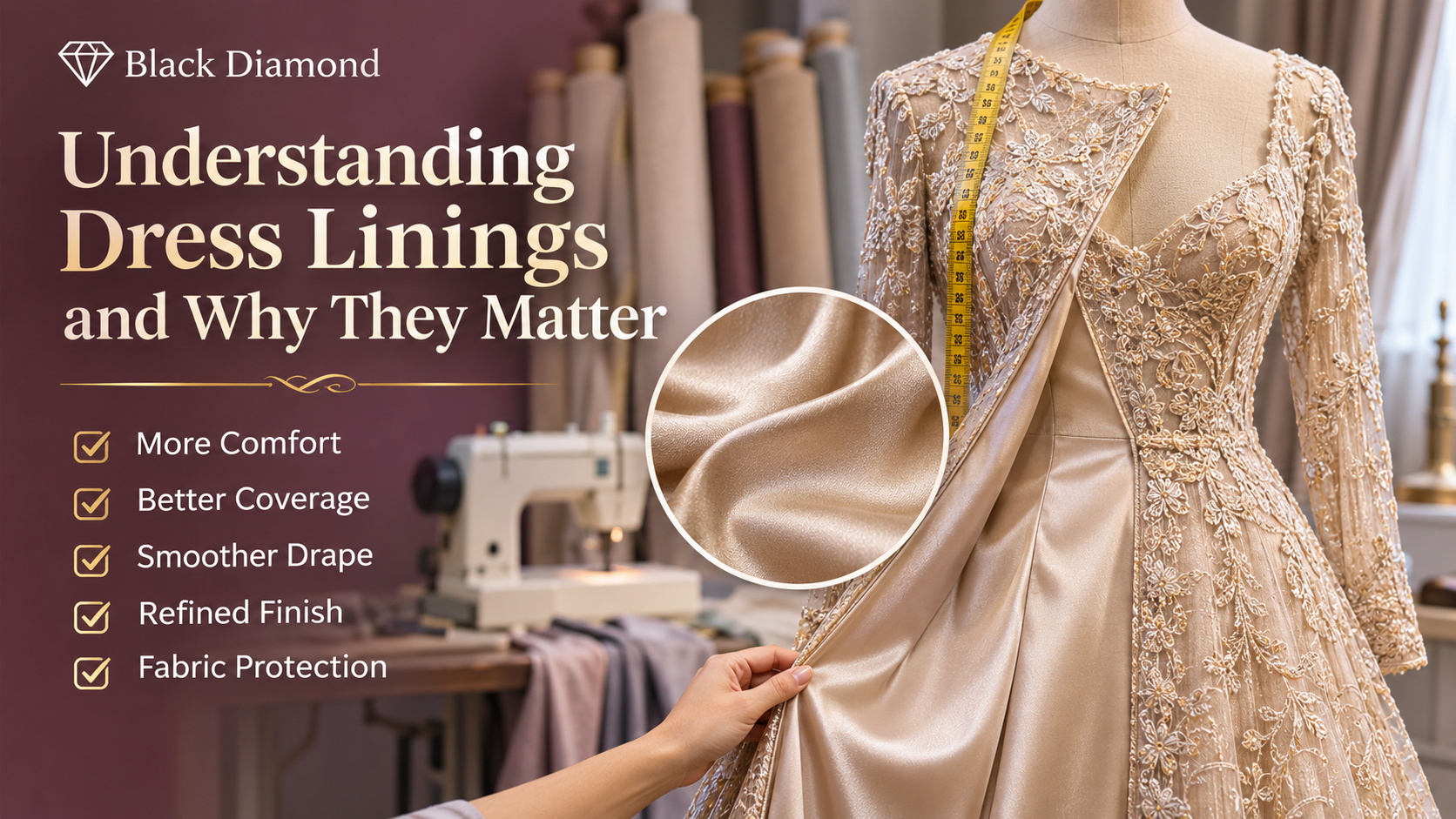
1. Greater Comfort
Some fashion fabrics, including heavily embroidered textiles, lace, and certain synthetic materials, can feel rough against the skin. A suitable lining creates a smoother interior surface, reducing friction and making the dress more comfortable during extended wear.
2. Better Coverage
Lightweight chiffon, delicate lace, and other sheer materials may require extra coverage. A carefully chosen lining can provide opacity while preserving the appearance and texture of the outer fabric.
3. Improved Drape and Movement
Linings can help dresses fall smoothly over the body. A slippery lining may reduce friction against undergarments, allowing the outer material to move more naturally when walking or sitting.
However, selecting a lining that is too stiff or heavy can change the intended silhouette. The lining should complement the outer material rather than restrict it.
4. Professional Interior Finishing
A carefully constructed lining conceals seam allowances, interfacing, and other internal construction details. This creates a cleaner appearance inside the garment and contributes to the overall impression of quality.

5. Protection for the Outer Fabric
A lining separates parts of the outer garment from direct contact with the skin. This can help reduce friction and exposure to body oils or perspiration. However, both the lining and outer fabric still require appropriate garment care.
Common Types of Dress Lining Fabrics
Different lining materials offer different properties. The most suitable option depends on the type of dress, its construction, and the conditions in which it will be worn.
| Lining Fabric | Characteristics | Common Applications |
|---|---|---|
| Polyester | Durable, widely available, often smooth | Everyday and occasion dresses |
| Viscose / Rayon | Soft, fluid and comfortable in suitable weaves | Flowing dresses and formalwear |
| Silk | Lightweight, smooth and luxurious | Premium evening and bridal gowns |
| Cotton | Soft, breathable and generally less slippery | Casual and summer dresses |
| Cupro | Smooth, fluid and comfortable | Premium and tailored garments |
| Acetate | Smooth, traditionally used for lining | Structured garments and formalwear |
Remember that fabric thickness, weave, finish, and construction influence performance as much as fiber type. For example, two polyester linings may feel and behave very differently.
How Dress Linings Are Constructed
A dress lining is often cut using patterns related to the outer garment, with adjustments where necessary for seam finishes, facings, pleats, and ease of movement. The lining must be attached carefully so it does not pull against the outer fabric.

Some linings are attached at the neckline and armholes, while others are connected at waist seams or other structural points. Hems may be left separate to allow the outer material and lining to move independently.
Choosing the Right Lining for Different Dresses
Evening Dresses
Evening dresses often use fabrics such as satin, crepe, velvet, chiffon, or embroidered textiles. A smooth, lightweight lining can help maintain an elegant silhouette while improving comfort.
For fitted designs, the lining should have suitable ease and compatible stretch. Flowing gowns generally benefit from linings that do not add unnecessary weight.
Wedding Dresses
Bridal gowns may contain several internal layers, including soft linings, tulle, supporting fabrics, and structured components. Each layer serves a different purpose, from coverage and comfort to shaping the silhouette.
The correct combination depends on the gown’s structure, outer material, and desired appearance.
Summer Dresses
For warm-weather garments, breathability and weight are particularly important. Lightweight cotton, viscose, or other suitable fabrics can provide coverage without unnecessarily increasing the overall weight of the dress.
Abayas and Jalabiyas
Abayas and jalabiyas frequently incorporate lightweight fabrics, decorative panels, embroidery, and flowing silhouettes. Strategic lining can provide coverage beneath sheer materials while preserving the design’s comfort and movement.
Partial lining may be especially useful when a fully lined garment would feel too heavy.
Full Lining vs. Partial Lining
| Feature | Full Lining | Partial Lining |
|---|---|---|
| Coverage | Covers most of the garment interior | Covers selected areas |
| Weight | May add more weight | Usually adds less weight |
| Interior Finish | Conceals more internal construction | Conceals selected construction areas |
| Typical Uses | Formal and structured dresses | Lightweight and selected casual styles |
Neither method is automatically better. The appropriate construction depends on the design, outer fabric, desired coverage, and wearer comfort.
Signs of a Well-Constructed Dress Lining
When examining the quality of a dress, consider the following details:
- The lining lies flat without unwanted bunching.
- It allows comfortable movement around the body.
- It does not pull against the outer fabric.
- Its hem remains appropriately positioned.
- Attachment points and stitching are secure.
- Its texture is comfortable against the skin.
- Its weight and stretch suit the outer material.
A dress lining should support the garment’s design without becoming a distraction during wear.
Common Dress Lining Mistakes
Choosing a Lining That Is Too Heavy
Excessively heavy lining fabric can alter the drape of delicate garments and make them less comfortable.
Ignoring Stretch Compatibility
A rigid lining inside a stretch dress may restrict movement and place strain on seams.
Using the Wrong Color
The color of the lining can affect the appearance of sheer outer fabrics. A suitable color should be tested beneath the actual dress material before sewing.
Insufficient Ease
Linings must allow enough room for comfortable movement, especially around the hips, shoulders, and waist.
Black Diamond’s Design Perspective
Thoughtful dress design goes beyond the visible fabric.
At Black Diamond, details such as fabric compatibility, lining placement, internal construction, and finishing are important considerations in evaluating an elegant garment.
A lining should enhance the comfort and appearance of the dress while respecting the intended silhouette. In warmer climates such as the UAE, overall garment weight, breathability, and comfort deserve special attention.
Final Thoughts
Dress linings may remain hidden, but their effect can be noticeable in the way a dress fits, moves, and feels.
From improving comfort and coverage to supporting a refined interior finish, the right lining plays an important role in quality dress construction.
A well-chosen lining is not simply an extra layer of fabric. It is part of the craftsmanship that makes a dress look and feel complete.
Image Credits and Licensing
Images are sourced from Wikimedia Commons.
- Tailoring 2 — Zitchat, CC BY-SA 4.0.
- Close up on understitching — Pago95, CC0 1.0.
- Sewing dress — jrouedcunliffe, CC BY-SA 2.0.
The photographs illustrate sewing and garment construction techniques. They do not depict Black Diamond products or services.
Licenses: CC BY-SA 4.0, CC0 1.0, CC BY-SA 2.0.