
Views: 5
Pleated Evening Dresses: Different Styles and Fabrics
Pleated evening dresses are a timeless expression of elegance, combining beautiful texture, flowing movement, and sophisticated design. From romantic chiffon gowns to structured satin dresses, pleating offers countless possibilities for formal occasions, weddings, and glamorous celebrations.

Pleating is a technique that creates repeated folds in fabric. Depending on the material and method, these folds can be delicate and narrow or bold and architectural. The result can add dimension, movement, and visual interest to an evening dress without requiring heavy embellishment.
1. Popular Styles of Pleated Evening Dresses
A-Line Pleated Evening Dresses
A-line pleated gowns feature a fitted upper section and a skirt that gradually widens toward the hem. Pleating gives the skirt natural movement and creates an elegant silhouette suitable for weddings, formal dinners, and evening receptions.
Lightweight chiffon and georgette are excellent fabric choices for soft A-line dresses, while organza can create additional volume and structure.
Grecian-Inspired Pleated Gowns
Grecian-inspired evening dresses feature flowing fabrics, draped necklines, gathered shoulders, and soft folds inspired by classical clothing. These designs often use fine pleating to create graceful movement and a relaxed yet sophisticated appearance.

One-Shoulder Pleated Evening Dresses
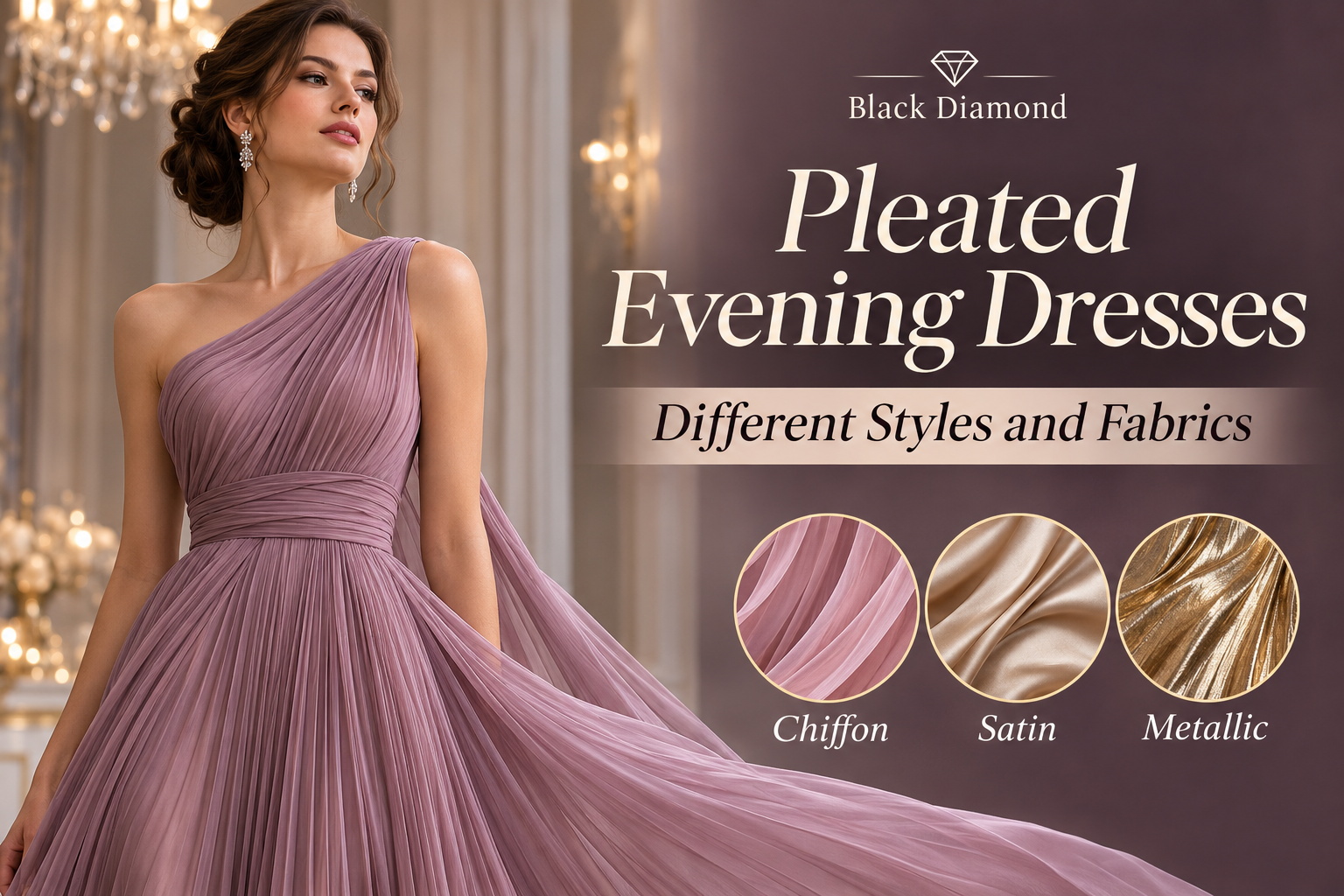
One-shoulder dresses combine asymmetrical necklines with pleated detailing to create a modern and distinctive appearance. Pleats may extend diagonally across the bodice or flow from one shoulder into the skirt.
These gowns work particularly well with elegant updos, statement earrings, and minimal accessories.
Metallic Pleated Evening Dresses
Metallic pleated gowns are ideal for glamorous evening events. Gold, champagne, silver, and bronze fabrics reflect light across their folded surfaces, highlighting the texture of the dress.
Fine pleating can create a shimmering effect, while larger folds provide dramatic movement. The finish depends on the fabric and metallic fibers or coatings used.
Modest Pleated Evening Gowns
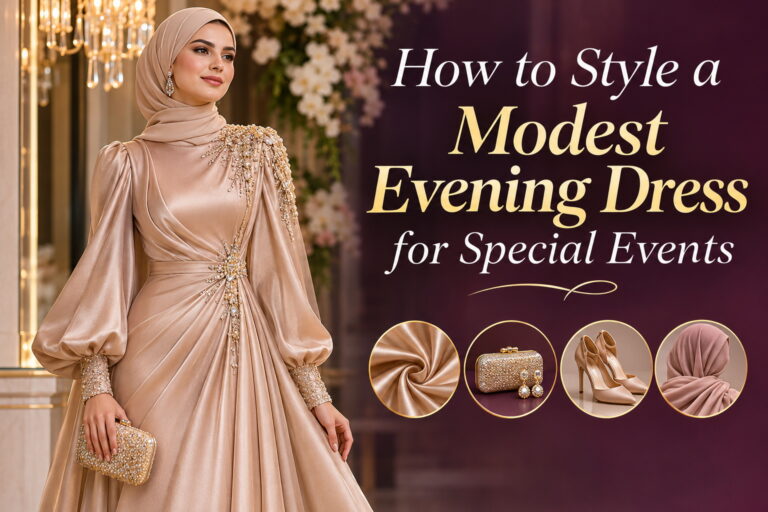
Pleated dresses can also be beautifully adapted to modest formalwear. Long sleeves, higher necklines, and floor-length skirts can be combined with delicately pleated panels, layered fabrics, and elegant waist detailing.
For a refined look, consider navy, burgundy, emerald, champagne, or classic black.
2. Different Pleating Techniques
The type of pleat has a significant influence on the appearance and movement of a dress.
Knife Pleats
Knife pleats are regular folds pressed in the same direction. They create a clean, structured appearance and work especially well in skirts and tailored eveningwear.
Accordion Pleats
Accordion pleats are narrow, repeated folds that open and close as the wearer moves. They are particularly effective in lightweight evening gowns because of their fluid movement.
Sunray Pleats
Sunray pleats radiate outward, typically becoming wider toward the hem. This technique is especially striking on flared skirts and circular panels.
Micro Pleats
Micro pleats are exceptionally fine folds that add texture without requiring elaborate decoration. They can give lightweight and metallic fabrics a distinctive surface.

3. Best Fabrics for Pleated Evening Dresses
Choosing the right fabric is essential because different materials create different textures, levels of volume, and movement.
| Fabric | Characteristics | Best Use |
|---|---|---|
| Chiffon | Lightweight, sheer, soft and flowing | Romantic gowns and layered pleated skirts |
| Georgette | Fluid with a slightly textured finish | Elegant draping and soft pleated designs |
| Satin | Smooth surface with a lustrous finish | Structured folds and formal silhouettes |
| Organza | Crisp, lightweight, sheer and structured | Architectural pleats and voluminous gowns |
| Tulle | Lightweight net-like construction | Layered skirts and decorative pleated panels |
| Metallic Blends | Reflective appearance and varied drape | Statement gowns and glamorous eveningwear |
4. How Pleating Changes the Shape of a Dress
Pleating can influence the visual proportions of an evening gown. Vertical pleats tend to emphasize length, while horizontal or wider folds may create additional volume.
Soft pleating around the waist can introduce gentle texture, while carefully positioned pleats across the bodice can highlight the craftsmanship of a fitted dress.
For a dramatic silhouette, designers may combine a structured upper section with a flowing pleated skirt.

5. Choosing the Right Colors
Pleated dresses are available in many beautiful shades, and the color affects how prominently the folds appear.
- Champagne and gold: Elegant choices for formal celebrations.
- Blush pink: Soft and romantic, especially in chiffon.
- Emerald green: Rich and sophisticated for evening occasions.
- Burgundy: Dramatic and timeless.
- Navy blue: Refined and versatile.
- Black: Classic, understated and elegant.
- Silver: Ideal for glamorous metallic pleated designs.
6. How to Style Pleated Evening Dresses
Because pleated dresses already contain decorative texture, accessories should complement the design rather than overwhelm it.
- Choose elegant heels that suit the dress length and occasion.
- Pair heavily pleated gowns with simple jewelry.
- Use a small clutch or structured evening bag.
- Consider an updo to showcase an asymmetric or detailed neckline.
- For metallic pleated dresses, keep accessories understated.
7. Caring for Pleated Fabrics
Pleated evening dresses often require delicate handling to preserve their shape and appearance.
- Always check the garment’s care label.
- Avoid ironing directly over permanent pleats unless instructed.
- Use professional cleaning for delicate or heavily embellished gowns when appropriate.
- Store dresses according to fabric weight and construction.
- Avoid crushing finely pleated garments during storage.
8. Black Diamond’s Design Perspective
At Black Diamond, elegant eveningwear is about balancing silhouette, fabric, detail, and individual style.
Pleating offers an inspiring range of design possibilities, from delicate chiffon skirts and graceful draped bodices to structured folds and sophisticated modest gowns.
Thoughtful fabric selection and careful pleat placement can help create evening dresses that feel refined, distinctive, and comfortable to wear.
Conclusion
Pleated evening dresses remain a beautiful choice for formal fashion because they combine movement, texture, and timeless elegance. Whether you prefer romantic chiffon, luxurious satin, structured organza, or shimmering metallic fabrics, the right pleating technique can transform an evening gown into a memorable design.
Understanding fabric characteristics, silhouettes, and styling details helps you choose a pleated evening dress that reflects your personal style and suits the occasion.
Image Credits and Editorial References
The historical garment photographs used in this article are sourced from Wikimedia Commons. Their source pages identify them as public-domain or Creative Commons CC0 images. These garments are independent fashion-history examples and are not presented as Black Diamond products or collaborations.